.svg)

Download Our Free HR Guide
Manufacturing HR Compliance Checklist
HR compliance in manufacturing isn’t optional; it’s essential. From right-to-work checks and GDPR to working time regulations and employee policies, UK manufacturers face strict legal responsibilities that can’t be ignored. This free checklist helps you:
- Spot compliance gaps across recruitment, contracts, working hours, and employee relations
- Prepare for audits and inspections with confidence
- Ensure HR policies and records meet UK employment law standards
- Improve consistency across sites, teams, and shift patterns
Whether you’re running HR in-house or managing people as part of operations, this guide gives you a clear, practical framework to reduce legal risk and support a fairer, safer workplace.
Download Free Resource
HR Compliance
Why HR Compliance Matters in Manufacturing
Failing to comply with employment law can result in fines, legal disputes, and business disruption.
Avoids Penalties and Claims
Manufacturers must comply with UK employment laws, including right-to-work checks, GDPR, and the Employment Rights Act. Non-compliance can lead to fines, tribunal costs, and reputational damage.
Support a Safe Working Environment
Clear HR policies around health and safety, bullying, and conduct help protect employees on the shop floor, reduce workplace incidents, and promote fairness across your workforce.
Accurate Time & Attendance Tracking
Manufacturing teams often work rotating shifts or zero-hour contracts. HR compliance includes maintaining accurate time-tracking and working hour records to meet Working Time Regulations and avoid payroll disputes.
Standardise Recruitment
A compliant hiring process ensures fair candidate screening, right-to-work documentation, and consistent employment contracts, essential for managing seasonal or high-volume recruitment.
Improve Audit Readiness
Using an HRMS or HRIS to centralise contracts, policies, and staff data makes it easier to track changes, manage retention timelines, and respond quickly during audits or inspections.
Reduce Staff Turnover
Clear communication, structured performance reviews, and consistent grievance handling improve employee relations and engagement, helping you retain skilled workers in a competitive sector.
HR Duo
Workforce Management
Optimise your daily operations with advanced time-tracking, flexible shift scheduling, and accurate payroll reporting.
HR Assist
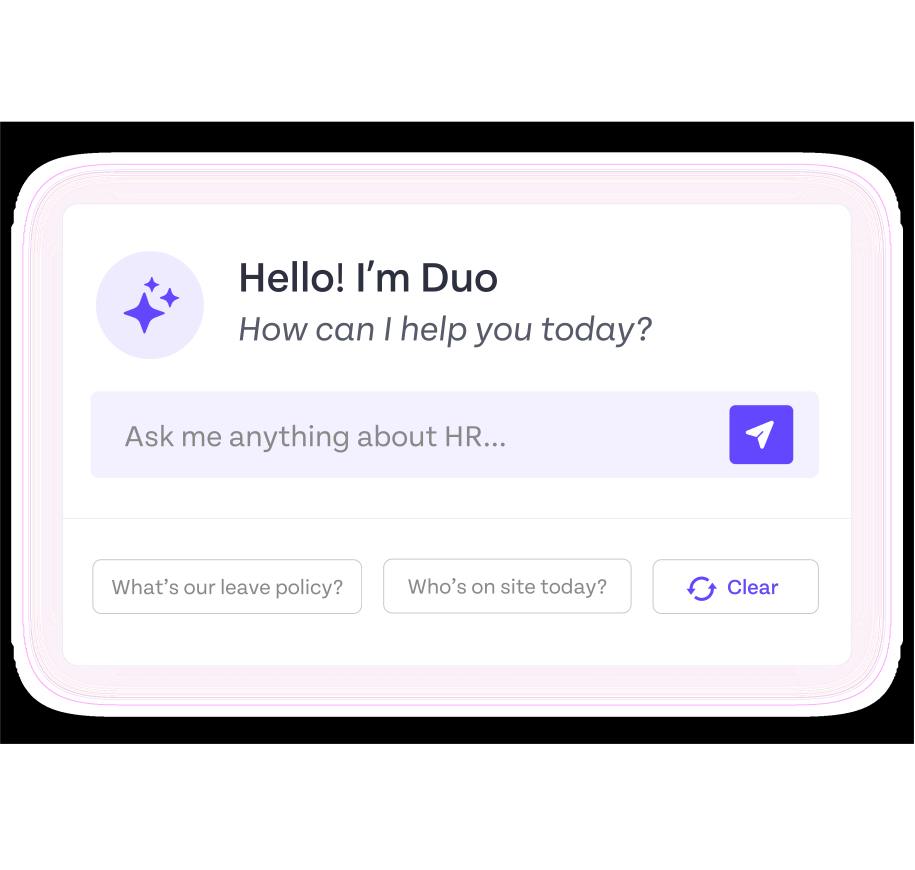
Automate routine HR tasks and ensure complete compliance with a human-backed digital assistant to support your team.
Employ Path
Manage every stage of the employment lifecycle with all the tools you need to recruit, engage and nurture your workforce.
.png)
HR About the Guide
This HR Management Software Checklist is a practical guide for HR and operations leaders looking to modernise their people systems and processes.
It helps you assess whether your current HR software truly supports the full employee lifecycle, from recruitment and onboarding to time tracking, payroll, and performance management. Packed with insights and a detailed evaluation framework, this guide walks you through what a high-performing HR management system (HRMS) should include:
- Core HRIS features: employee database, org charts, document storage
- Talent management: applicant tracking, onboarding, performance reviews
- Time and attendance: time tracking, leave management
- Payroll and benefits administration
- Integrations and reporting capabilities
Whether you’re looking to upgrade your existing HR software or implement a new system for the first time, this checklist will help you identify critical features, evaluate potential vendors, and ensure you choose an HRMS that truly meets your organisation’s needs.
FAQs
How much IT resource is actually required for implementation?
Minimal. Because our transformation engine handles the complex mapping between your systems and the banks, your IT team doesn’t need to write custom code. Their primary role is simply providing a secure location for your ERP to drop or pick up files.
Our ERP has a banking module. Why do we need AccessPay?
Most ERPs stop at the "file export" stage, leaving you to manually upload those files into various bank portals. AccessPay bridges the "last mile" by securely delivering those files to the bank and automatically retrieving statements for reconciliation - all without human intervention.
How do you handle global connectivity compared to just UK BACS?
We use a combination of direct host-to-host connections, APIs, and the SWIFT network to reach over 16,000 banks. This allows you to manage BACS, CHAPS, SEPA, and international SWIFT payments through a single, standardised workflow regardless of the bank.
What happens if a bank changes their file formats or security protocols?
We handle the maintenance. When banks update their requirements (such as the transition to ISO 20022), we update the mapping in our transformation engine. This ensures your internal workflows remain identical, even when the banks change the goalposts.
Can we implement this in phases across different entities?
Yes. Most of our clients start by automating their most manual or high-risk process (usually BACS payments or global statement retrieval) and then scale the platform to other banks and international entities once the first connection is live.
How does this replace the "manual checks" we currently do in bank portals?
AccessPay moves your controls "upstream." Instead of having staff spot-check files in a bank portal, you set automated governance rules (like multi-eye approvals and sanctions screening) within our platform. This creates a standardised, audit-ready process across every bank you use.